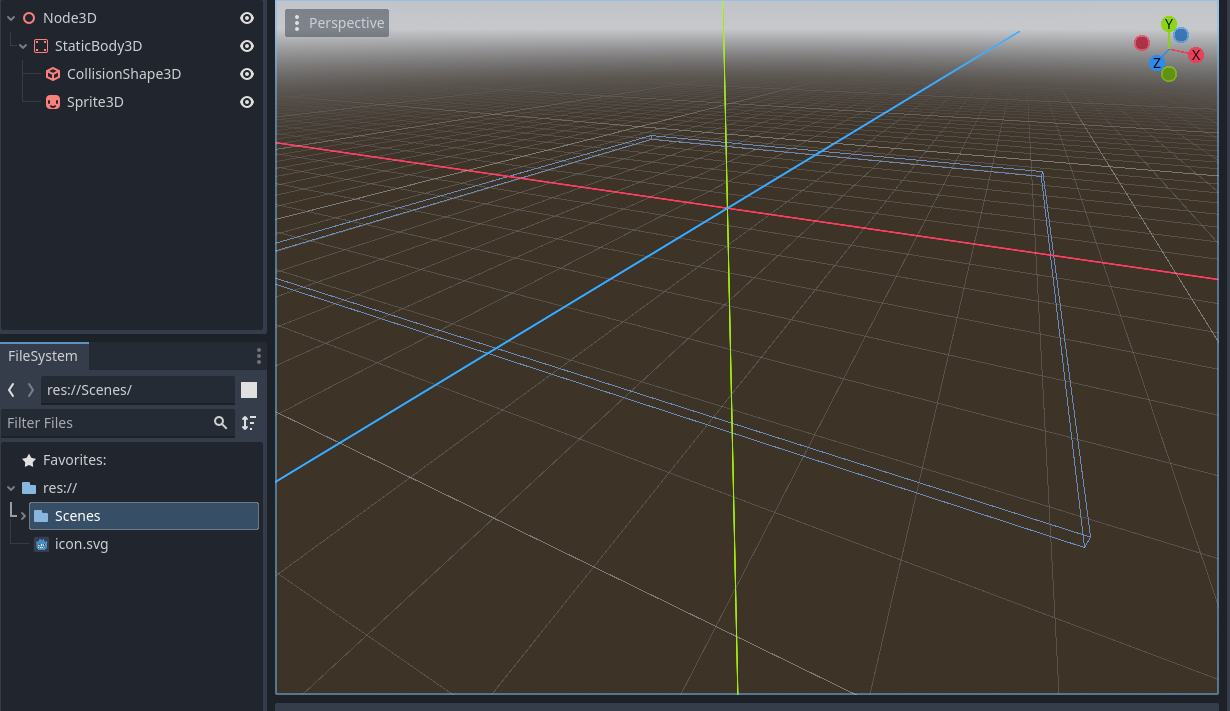
dorpen that's a physics body.
you need a visual, which can be a sprite3D but is usually a MeshInstance3D.
create a mesh in blender, uv wrap it, export it to gltf, import it in godot, open as inherited scene, and copy paste in your scene.
for prototyping you can use one of godot's built in meshes, like cube, but make sure to remove them all eventually and replace them with custom meshes, since they can lead to performance issues and visual glitches, as they are not meant to be used in a finished game.
think of meshinstance3D and sprites, and physics bodies as existing in different dimensions. when you parent a visual node to a physics body, it will be moved by it.
In this case your visual doesn't need to be a child of the physics body because StaticBody3D should NEVER move, so you can put these as children of a different Node3D. In your staticbody3D you can add more colliders for each wall or floor and it will have better performance than having multiple staticbodies, while making your life easier. I usually have one StaticBody3D for the floors and one for the walls, that way you can set different collision layers, this can help prevent your character from walking on walls or for implementing stairs.